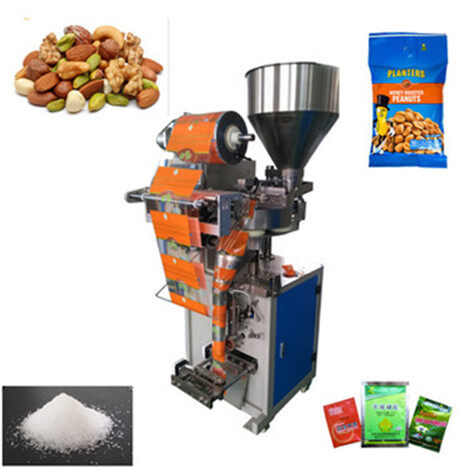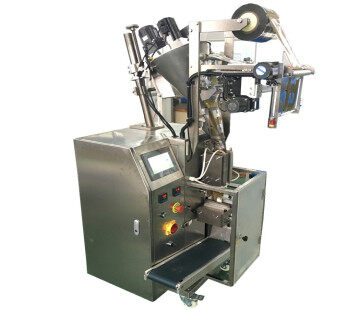
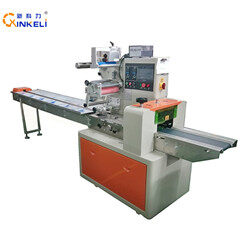
1. First, determine the customer's materials and products. Second, determine the product dimensions.
Which products will the pillow packaging machine be used to package? Some customers need to package a variety of products and hope that one packaging machine can package all their varieties. Actually, a single machine is better than a multi-purpose machine. It's best not to package more than three varieties with one pillow packaging machine. Also, products with significantly different dimensions should be packaged separately.
2. How to determine the machine model?
Calculate the film width of the product to determine the machine model.
Calculation method: (Product height + Product width) * 2 + 30 = Film width. Generally, the machine model represents the film width, for example, KL-250, the film width is 250mm.
If a product's height is 50mm and its width is 60mm, then the film width is (50+60)*2+30=250mm. A film width of exactly 250mm can be used with a KL-250 model, or a larger, safer model like the KL-320 or 350.
If the product dimensions exceed those in the catalog, consult the manufacturer for custom-made dimensions.
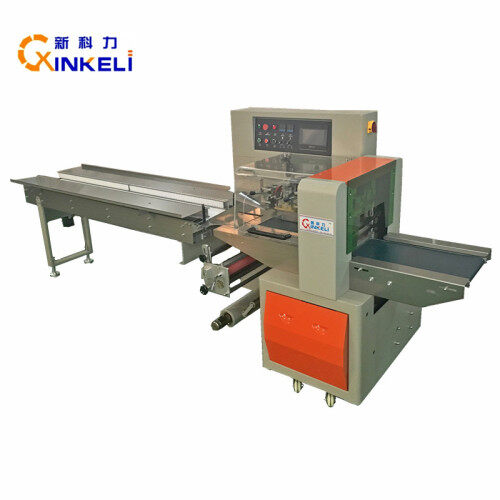
3. Once the product dimensions are determined, consider whether the product material is suitable for top-feed or bottom-feed film packaging.
The main difference lies in the feeding mechanism. With top-feed film packaging, because the wrapping process is from top to bottom, the feeding may not be able to reach the film properly, preventing it from moving with the film.
This can lead to material clamping issues.
With bottom-feed film packaging, the film emerges from the bottom, and the feeder pushes the material directly onto the film, allowing the product to move directly with the film, reducing material clamping.
Some customers require the center seal to be on the back or front. In top-feed film packaging, the center seal is on the bottom of the product, while in bottom-feed film packaging, the center seal is on top.
any flow pack inquired kindly contact me~